
What First-Time Highlight Clients Need to Know Before They Sit in the Chair – From the Color Specialists at Parlay Hair and Beauty, Jensen Beach, Florida
Your First Highlights Are a Big Moment – Let’s Make Sure They Go Right
There is something genuinely exciting about deciding to get highlights for the first time.
Maybe you have been thinking about it for months – saving photos on your phone, building a Pinterest board, casually mentioning it to friends to gauge their reaction. Maybe it was more spontaneous – you caught a glimpse of someone’s hair in Jensen Beach’s golden afternoon light and thought, I want that. Maybe you have been curious about color for years but held back because the whole thing seemed complicated and you did not quite know where to start.
Whatever brought you to this moment, the decision itself is a good one. Highlights – when they are done well by an experienced colorist who understands your hair, your face, and your vision – are genuinely transformative. They add dimension and luminosity to your hair that makes your features look more defined, your skin tone more radiant, and your overall appearance more vibrant and alive. They can make good hair look extraordinary and ordinary hair look genuinely beautiful.
But here is the honest truth that the beauty industry does not always lead with: highlights done poorly are immediately visible. They can look stripy, artificial, and disconnected from the natural color of the hair in ways that are difficult and expensive to fix. They can leave hair brassy, orange, or a shade completely different from the one you imagined. They can damage the hair’s structural integrity if the lightening process is not handled correctly. And they can create the kind of color frustration that makes clients swear off highlights entirely – often just before they would have found the right colorist who could have given them exactly what they wanted.
The difference between a first highlight experience that launches years of beautiful, confident color and one that ends in disappointment is almost always one of the same few things – specific, identifiable mistakes that first-time highlight clients make repeatedly, not because they are careless or uninformed, but because nobody told them what to watch out for.
This guide is about those mistakes. At Parlay Hair and Beauty in Jensen Beach, Florida, our color specialists have seen every variation of the first-time highlight situation – the ones that went beautifully and the ones that required significant correction work – and we know exactly what makes the difference. The five mistakes in this guide are the five things we most consistently wish clients knew before their first highlight appointment.
Read this. Take it with you. Share it with every woman you know who is thinking about getting highlights for the first time. Because your first highlights deserve to be exactly what you imagined – and with the right knowledge, there is every reason they will be.
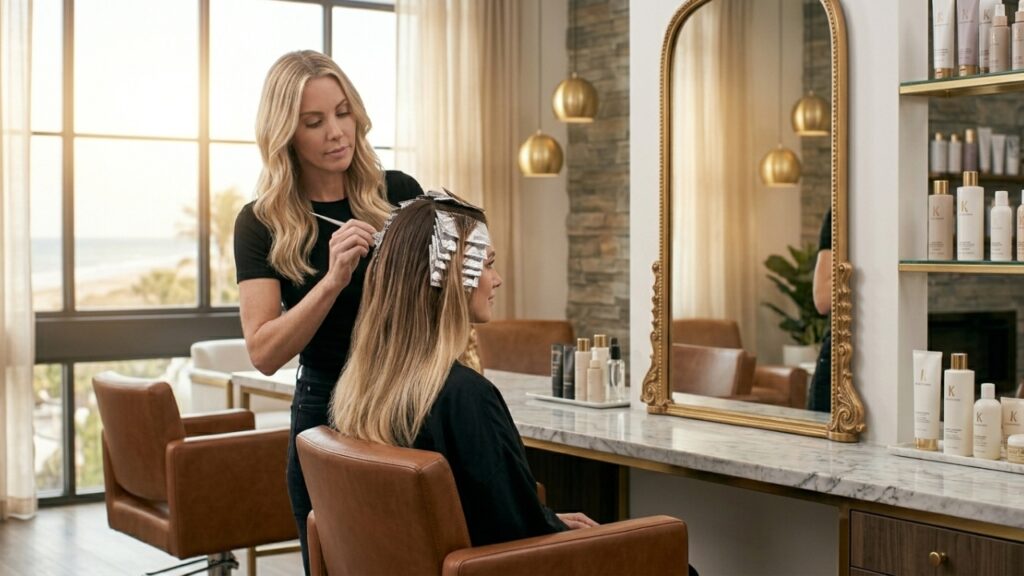
The Foundation: Understanding What Highlights Actually Involve
Before we get into the mistakes, a brief foundation of knowledge about what highlights actually are and what the process involves – because the mistakes will make more sense once you understand the basic mechanics.
Highlights are sections of hair that have been lightened – either through a foil technique (where sections are enclosed in aluminum foil with a lightening product), a freehand painting technique (balayage, where lightener is painted directly onto sections without foils), or a combination of both. The lightened sections create contrast against the surrounding natural or base color, producing the multi-tonal, dimensional effect that makes highlighted hair look so naturally complex and beautiful.
The lightening process involves a chemical reaction that oxidizes the melanin – the natural pigment – within the selected sections of hair, progressively lifting the color from its natural shade toward blonde or lighter tones. This process changes the hair’s internal structure to some degree – which is why the products used, the developer strength, the processing time, and the overall management of the lightening process are all factors that affect both the quality of the result and the health of the hair.
Toning is the step that occurs after lightening – a color or toner is applied to the lifted sections to achieve the specific final shade. Toning is what gives highlights their finished, polished color rather than a raw, lifted appearance.
Maintenance involves returning to the salon periodically – every few weeks for traditional foil highlights, every few months for balayage – for toner refreshes and highlight refresh services that keep the color looking fresh and intentional.
With that foundation established, here are the five mistakes – and more importantly, how to avoid every single one of them.
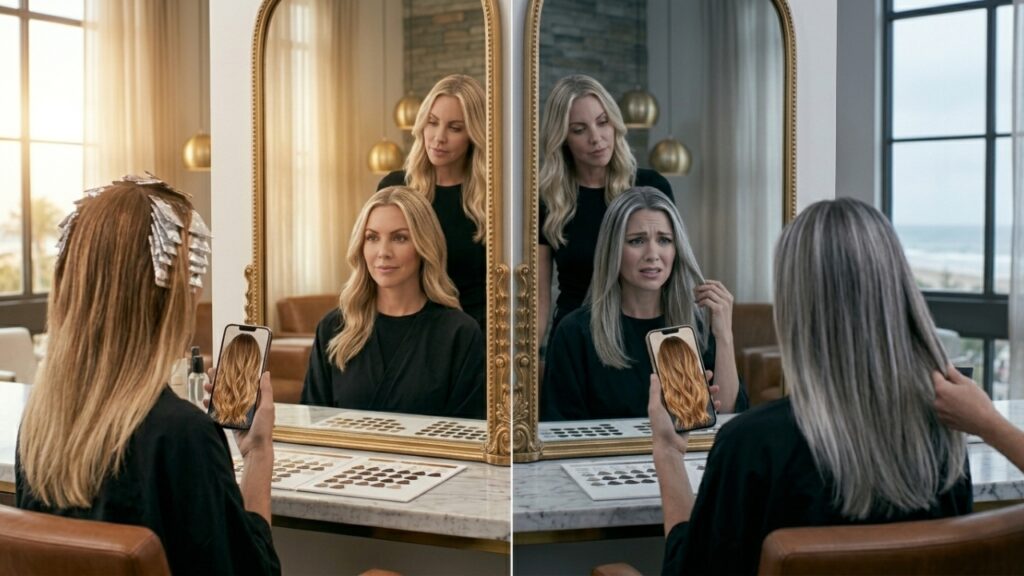
Mistake #1: Choosing Your Highlight Color Based on the Photo Rather Than Your Skin Tone
Why This Is the Most Common First-Time Highlight Mistake
This is the mistake that happens before the client has even sat in the salon chair – and it is by far the most frequently made mistake of any on this list. It is also the most understandable one, because in an era of social media and visual inspiration, using photos to communicate what you want from your hair color is genuinely useful and genuinely important.
The problem is not the photo itself. The problem is when the photo becomes the only input in the color decision – when the specific shade of blonde or the specific warmth or coolness of a highlight result is chosen because it looked beautiful on someone in a photograph, without considering whether that exact shade will look equally beautiful on the person choosing it.
Here is the fundamental truth about hair color and skin tone: the most beautiful highlight shade for you is not necessarily the same shade that looks beautiful on someone else. Hair color exists in relationship to skin tone – the two are inseparable elements of a complete appearance – and a shade that is breathtaking on a client with warm, golden skin might look harsh or washed-out on a client with cool, pink undertones. And vice versa.
This is not theoretical. It is one of the most consistently important and consistently overlooked aspects of color selection – and it is one of the primary reasons that first-time highlight clients sometimes walk out of their appointment with color that they cannot quite explain is off, even though the lightened sections are technically well-executed.
The Science of Skin Tone and Highlight Color
Your skin has an undertone – a subtle hue beneath the surface color of your skin that influences how colors interact with your face. The three primary undertone categories are:
Warm undertones – yellow, golden, or peachy tones beneath the skin. Common in women with olive skin, women who tan easily and develop a golden hue, and women whose skin has a warm, luminous quality in natural light.
Cool undertones – pink, rosy, or bluish tones beneath the skin. Common in women with very fair skin that burns rather than tans, women with visible pink or rosy flushing in the cheeks, and women who look best in silver jewelry rather than gold.
Neutral undertones – a balance of warm and cool tones with neither dominating. The most versatile undertone category – neutral-toned clients can wear both warm and cool highlight shades with flattering results.
How undertones affect highlight selection:
Warm-toned highlight shades – honey, golden, caramel, butterscotch, warm champagne – complement warm and neutral skin undertones by enhancing the golden quality of the skin and creating a harmonious, luminous warmth between the hair and the face. On cool-toned skin, however, very warm highlights can create a jarring contrast that makes the skin look more flushed or sallow than it naturally is.
Cool-toned highlight shades – ash blonde, pearl, sandy, cool beige, icy platinum – complement cool and neutral skin undertones by creating a refined, elegant harmony between the cool hair and the cool or balanced skin. On warm-toned skin, very cool, ashy highlights can sometimes make the complexion look dull, gray, or flat rather than vibrant.
How to Determine Your Skin Undertone
The vein test: Look at the veins on the inside of your wrist in natural light. Green or greenish veins suggest warm undertones. Blue or purple veins suggest cool undertones. A mix of both suggests neutral undertones.
The jewelry test: Do you look better in gold jewelry or silver jewelry? Gold jewelry tends to flatter warm undertones; silver tends to flatter cool undertones. If you look equally good in both, you likely have neutral undertones.
The white vs. cream test: Hold a pure white piece of fabric and a cream-colored piece against your face and compare. If the bright white looks better – more harmonious, less draining – you likely have cool undertones. If the cream or warm white looks better, warm undertones are more likely. If there is no clear difference, neutral undertones.
The tan test: Does your skin tan easily to a golden, olive color or does it burn and then fade back to pink? Easy golden tanning suggests warm undertones; burning and minimal tanning suggests cool undertones.
How to Avoid This Mistake
Tell your colorist your skin tone concerns explicitly – do not assume they will automatically assess your undertones without being asked. A great colorist at Parlay will always factor skin tone into the color recommendation, but you can support that process by sharing what you know about your own undertones and specifically asking “What shade of highlights will work best with my skin tone?”
Bring photos of colors you love AND colors you have tried or seen that did not work for you. The negative examples are as useful as the positive ones – perhaps more so, because they tell the colorist specifically what to avoid. “I tried a very ashy blonde once and it made my skin look gray” is enormously valuable information.
Ask your colorist to explain why they are recommending a specific shade rather than simply accepting the recommendation without understanding the reasoning. “I am recommending a warm honey blonde for you because your skin has warm undertones and this shade will enhance the golden quality of your complexion” is a complete, satisfying explanation. A colorist who cannot explain their recommendation in terms of your specific undertones is not making a fully informed recommendation.
Be open to the colorist’s expertise. If you came in with a photo of icy platinum highlights and your colorist recommends a warmer beige instead after assessing your skin tone, that recommendation is based on their professional judgment about what will look most flattering on your specific face. Try to hear it as useful expertise rather than a disappointment.
Mistake #2: Not Being Honest About Your Hair History During the Consultation
Why This Mistake Is More Consequential Than You Might Think
The consultation before your highlights is not small talk. It is the foundation of every decision your colorist makes – about formulation, about developer strength, about processing time, about the techniques they will use and the results they can realistically promise. And the quality of the consultation – and therefore the quality of the decisions built on it – depends directly on the honesty and completeness of the information you provide.
Many first-time highlight clients withhold or minimize their hair history – sometimes because they are embarrassed about past box dye use, sometimes because they assume it is not relevant, sometimes because they simply do not think to mention things that seem old or unimportant. And this withholding, however innocent, can have real consequences for the quality and safety of their highlight result.
Here is why your hair history matters so profoundly to the highlight process:
Previous color applications change how the hair responds to lightening. Hair that has been colored – particularly hair that has had multiple box dye applications – does not lift the same way virgin hair does. It may lift unevenly. It may resist lightening in areas of heavy color buildup. It may contain metallic salts that react unpredictably with bleach. A colorist who does not know about your color history cannot account for these factors – and the result is a lightening process that may produce an uneven, unexpected, or potentially damaging outcome.
Previous chemical services affect the hair’s structural tolerance. Relaxers, perms, keratin treatments, and even intensive deep conditioning treatments with specific chemical ingredients all affect how the hair responds to additional chemical processes. A colorist who is aware of these previous services can adjust their approach to protect your hair’s integrity. A colorist who does not know about them cannot.
The timing of previous services matters. Hair that was professionally colored eight weeks ago is in a very different state from hair that was colored three years ago. The recency of previous chemical services affects what can safely be done next – and your colorist needs this information to make appropriate decisions about timing and formulation.
What to Tell Your Colorist – A Complete List
Come to your consultation prepared to share all of the following:
Box dye history. If you have used box dye at any point – even years ago – share this. Include approximately how frequently you used it, what shades, and when you last used it. If you are not sure how long the box dye has been in your hair, say so. Approximate information is better than no information.
Professional color history. Any professional color services you have had in the past – color, highlights, balayage, toners – and when they were last performed.
Chemical service history. Any relaxers, perms, or chemical straightening services, and when they were done. Even if these were years ago, the effects can still be present in the longer sections of the hair.
Keratin treatments. Many clients do not think of keratin treatments as relevant to color history, but they are. Keratin treatments affect the hair’s porosity and can affect how color deposits and how lightener processes.
Hair damage or breakage. If your hair has experienced significant damage, breakage, or loss of elasticity, this is important for the colorist to know before applying any lightening treatment.
Previous adverse reactions. If you have ever experienced an unexpected or adverse reaction to a hair color product – unusual heat, dramatic damage, allergic response – share this without hesitation.
Current product routine. The products you use on your hair daily can affect how it responds to color – particularly products with high oil content, heavy silicones, or specific active ingredients.
What Happens When You Withhold This Information
The risks of withholding hair history information are not hypothetical – they are outcomes that experienced colorists see on a regular basis.
Uneven lifting. When a colorist does not know about previous box dye and applies bleach to highlights, the sections with heavy color buildup may resist lifting while the root area with less buildup lifts quickly – creating uneven, patchy highlights that are difficult and expensive to correct.
Unexpected chemical reactions. The metallic salt issue described in detail in our color correction guide is the most serious risk – but other unexpected reactions are also possible when the colorist does not have complete information about what is in the hair.
Damage to compromised hair. Hair that is already weakened from previous chemical services may not be able to safely handle the lightening required for highlights without further damage – but a colorist cannot make that protective assessment without knowing the hair’s history.
The simple, practical advice: tell your colorist everything. There is no judgment at Parlay about past box dye use, about DIY color attempts, about any aspect of your hair’s history. We need the information to take the best possible care of your hair – and that is the only reason we ask.
Mistake #3: Going Too Light Too Fast
The Understandable Impulse and Why It Leads to Disappointment
You have spent months looking at photos of beautiful blonde hair. You have finally committed to getting highlights. You are sitting in the consultation chair and the colorist is asking about your target – and the answer that comes out of your mouth is the most dramatic, most beautiful version of what you have been imagining. Platinum blonde. Icy, bright, significantly lighter than your natural color. All at once. Today.
This impulse is completely understandable. You have been waiting. You are excited. You have the photo right there on your phone. Why not go for it?
Here is why not: because your hair cannot safely achieve that result in a single appointment from most dark or medium starting points – and attempting to force it to does one or more of the following things:
It produces an uneven, patchy result because the hair lifts at different rates in different sections when pushed too hard in a single session.
It compromises the structural integrity of the hair – breaking the protein bonds that give hair its strength and elasticity, resulting in hair that is weak, dry, and prone to breakage.
It creates a starting point for the following appointments that is so damaged that less can safely be done at the next session – paradoxically slowing the overall journey toward the desired result.
It produces a result that, even if technically achieved, looks flat, artificial, and lacking the dimension and luminosity of genuinely beautiful blonde – because hair that has been severely over-processed loses the healthy quality that makes blonde hair look extraordinary.
The Stage Concept – Why Going Slowly Gets You There Faster
This sounds counterintuitive but it is one of the most important principles in color work: the client who approaches the dark-to-light journey with patience and realism about what is achievable at each stage will arrive at their goal hair faster and with more beautiful results than the client who tries to achieve everything in the first appointment.
Here is why:
When highlights are approached in stages – lifting to a safe, beautiful intermediate result at Session 1, then building from that foundation at Session 2, then refining and toning at Session 3 – the hair at each stage is in excellent condition because it has not been pushed beyond its safe tolerance. It arrives at the next appointment with strength and integrity intact, which means more lift can be safely achieved at that session. The overall trajectory is faster because no session is slowed or compromised by damage from the previous one.
When highlights are pushed too aggressively at a single session – lifting the hair as far as possible in one sitting – the hair arrives at the next appointment in compromised condition. The colorist must be more conservative about what can safely be done because the hair cannot handle the same degree of chemical processing as healthy hair. Sessions may need to be postponed to allow recovery time. The overall trajectory is slower because each session is limited by the damage accumulated in the previous one.
The staged approach also produces consistently more beautiful interim results – because at each stage, a toning treatment makes the hair look intentional and genuinely lovely rather than like a mid-process work in progress.
What “Too Light Too Fast” Actually Looks Like
For clients who are not sure what the warning signs of over-processing look like, here are the specific indicators that the hair has been lightened too aggressively:
Extreme elasticity loss. Healthy hair, when stretched, returns to its original length. Over-processed hair stretches significantly and may not return to its original length – or may snap rather than stretch. The “wet noodle” quality of severely over-processed hair is unmistakable.
Mushy or gummy texture when wet. Hair that feels mushy, gummy, or excessively pliable when wet has experienced significant protein bond breakdown – a sign of over-processing.
Excessive breakage. Finding significant amounts of broken hair in the brush, on clothing, or in the shower beyond normal shedding is a sign of structural damage that requires immediate attention and restorative treatment before any further chemical processing.
Extreme dryness and lack of shine. While some dryness after lightening is normal and manageable with conditioning, severe dryness and a complete loss of shine or luster are signs that the hair has been pushed beyond its safe tolerance.
How to Avoid This Mistake – What to Say and Ask
Before your appointment: Research what is realistically achievable from your specific starting point in a single first highlight appointment. Understand that if you are starting from dark brown or darker hair, a single session will not take you to platinum – and that is not a failure, it is chemistry.
During the consultation: Ask your colorist specifically, “What is the lightest we can safely go in this first appointment, and what will the result look like?” A great colorist will give you a specific, honest answer – not the most dramatic possible answer or the most conservative possible answer, but the accurate answer based on their assessment of your hair.
Ask about the journey: “If I want to eventually get to [target shade], how many appointments will that realistically take and what will my hair look like after each one?” Understanding the full journey before you begin it allows you to enjoy each stage rather than being disappointed that you have not arrived at the destination yet.
Trust the staged process: If your colorist recommends a more conservative first appointment than you had imagined, trust their expertise. The colorist who recommends the staged approach is protecting your hair’s health and your long-term color journey – not denying you the result you want.
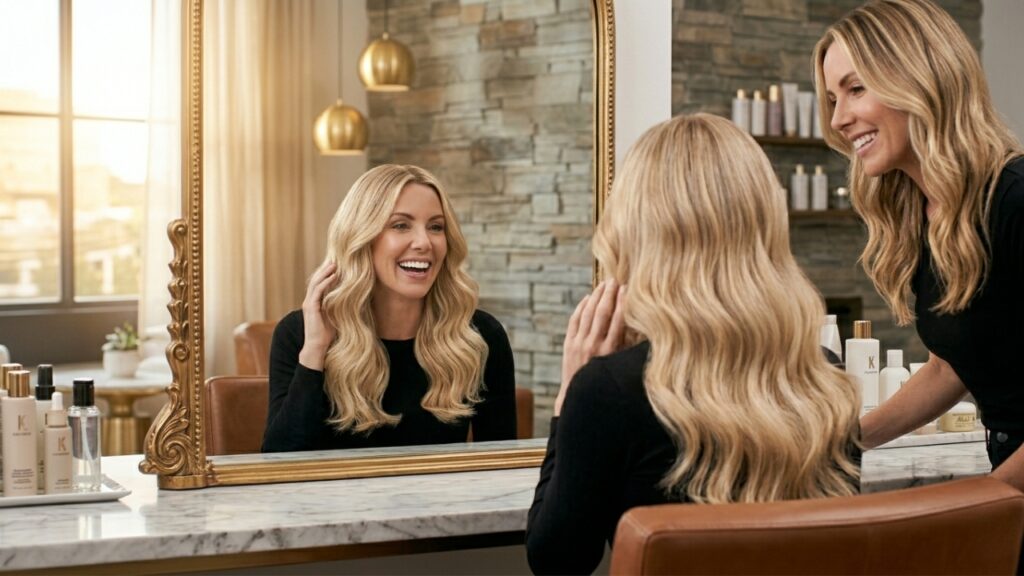
Mistake #4: Choosing the Wrong Technique for Your Hair Type and Lifestyle
Why Technique Matters as Much as Color
When most first-time highlight clients think about their appointment, they think primarily about the color – how light, how warm or cool, how much coverage. What they often do not think about – because nobody has told them to – is the technique. And this matters enormously, because different highlighting techniques produce fundamentally different results that suit different hair types, different aesthetic preferences, and different lifestyle needs in very different ways.
The two primary technique categories are:
Foil highlights: Sections of hair are woven or sliced and enclosed in aluminum foil with lightener, creating a controlled, isolated lightening environment that produces bright, defined, high-contrast highlights.
Balayage / freehand painting: Lightener is painted directly onto sections of the hair without foils, creating softer, more blended, more naturally graduated highlights that mimic the organic variation of sun-lightened hair.
Each technique has specific characteristics that make it the right choice for some clients and the wrong choice for others – and choosing between them (or choosing a combination of both) should be based on a genuine understanding of what each produces and how that aligns with your specific hair, lifestyle, and aesthetic.
The Characteristics of Foil Highlights – Who They Are Best For
What foil highlights produce: Defined, bright, high-contrast lightened sections with clean edges and consistent, predictable brightness throughout. The result reads as obviously – beautifully obviously – highlighted rather than naturally sun-kissed.
Maintenance requirements: Traditional foil highlights typically need refreshing every six to ten weeks to maintain the crispness and brightness of the lightened sections and to prevent the grow-out from creating a noticeable root line. Toner refresh appointments are also needed every four to eight weeks to keep the tone from going warm or brassy.
Best for clients who:
- Want bright, high-contrast, impactful highlights with maximum visual effect
- Have darker bases that need more significant lifting to achieve the desired contrast
- Want their highlights to maintain precise placement and consistent brightness over time
- Are comfortable with a regular maintenance schedule every six to ten weeks
- Want control and predictability in their color results
Potentially less ideal for clients who:
- Want the most natural-looking, effortless result that does not appear obviously colored
- Prefer a lower-maintenance color schedule with longer intervals between appointments
- Have fine or thin hair where the defined edges of foil highlights may look too heavy
- Want color that grows out gracefully without a visible root line
The Characteristics of Balayage – Who It Is Best For
What balayage produces: Soft, naturally blended, sun-kissed lightened sections that transition gradually from the natural base color without defined edges. The result reads as natural – like beautifully sun-lightened hair rather than obviously colored hair.
Maintenance requirements: Balayage is genuinely lower-maintenance than traditional foil highlights – the seamless grow-out means most clients return every three to five months for a full refresh, with toner refresh appointments every six to ten weeks. The longer interval between full appointments is one of the most significant practical advantages of balayage.
Best for clients who:
- Want the most natural-looking, effortlessly sun-kissed result
- Prefer a lower-maintenance color schedule with longer intervals between full appointments
- Have hair that they want to grow out gracefully without an obvious root line
- Have fine or thin hair that benefits from the softer, less defined quality of balayage
- Want color that looks like it belongs on their head rather than like it was applied to it
- Have a busy lifestyle and need color that maintains its beauty without constant salon attention
Potentially less ideal for clients who:
- Want bright, high-contrast, clearly defined highlights with maximum impact
- Have very dark bases that require more controlled, aggressive lifting than balayage typically provides
- Want their highlights to maintain precise placement over time
Choosing Based on Lifestyle – The Jensen Beach Factor
Jensen Beach’s specific lifestyle is genuinely relevant to the technique decision – more so than in many other environments.
The active, water-centric, outdoor lifestyle of Jensen Beach – the beach days, the boating, the paddleboarding, the outdoor dining and events – creates conditions that are harder on high-maintenance color than on low-maintenance color. Chlorine, salt water, UV radiation, and humidity all affect highlighted hair – and they affect defined, precisely toned foil highlights more noticeably than the softer, more forgiving results of balayage.
A first-time highlight client who spends three days a week at the beach and another day at the pool is, in most cases, better served by a balayage or combination technique that is more forgiving of the environmental factors she is exposing her hair to – not because she cannot also get beautiful foil highlights, but because the balayage will maintain its beauty more gracefully under those conditions.
How to Avoid This Mistake
Tell your colorist about your lifestyle honestly and specifically. How often do you swim? How much time do you spend outdoors in Jensen Beach’s sun? How often do you style your hair? What is your morning routine? How important is it that your color look fresh at all times versus looking beautiful for the first few weeks and then gradually evolving? All of this is relevant to the technique recommendation.
Ask specifically: “Which technique is right for my hair type and how I live?” Not just “should I get balayage or foil highlights” in the abstract – but specifically, given your hair’s specific characteristics and your specific lifestyle, which technique will give you the best result that you can actually maintain.
Be honest about your maintenance tolerance. If you know from experience that you are unlikely to make it back to the salon every eight weeks, acknowledge that in the consultation and ask for a technique that allows longer intervals. There is no shame in being realistic about your maintenance habits – the right technique for your actual life will make you significantly happier than the right technique for an idealized version of it.
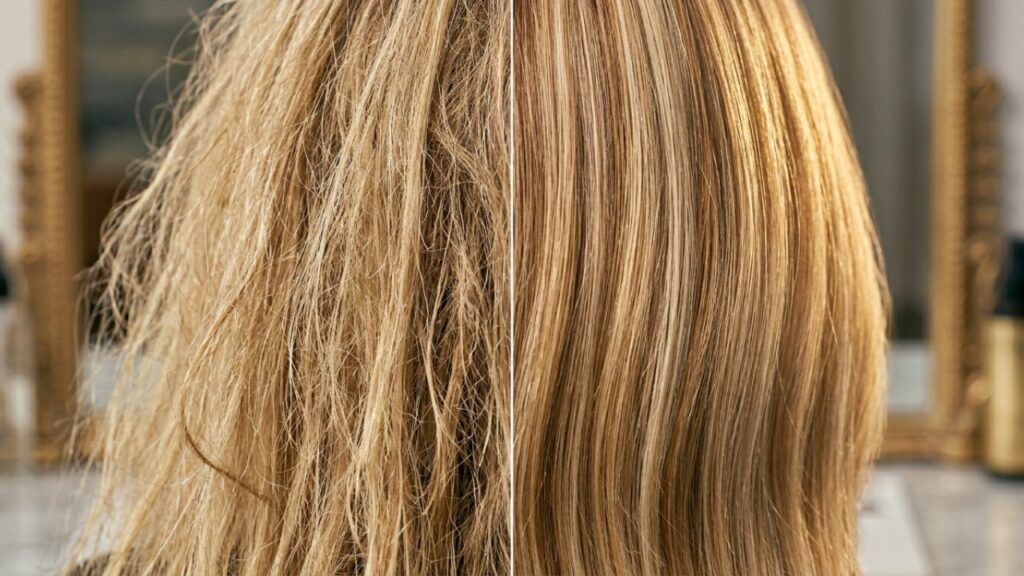
Mistake #5: Neglecting the Home Care Routine After Your Highlights
Why What Happens After the Appointment Matters as Much as the Appointment Itself
Here is a truth that many first-time highlight clients do not fully internalize until they have experienced it firsthand: the quality of your highlights six weeks after your appointment is determined as much by what you do at home as by what happened in the salon.
Your colorist can create the most beautiful highlights in Jensen Beach – precise placement, perfect formulation, flawless toning, a result that is genuinely extraordinary walking out of the salon. And if you go home and wash your hair with a regular shampoo every day, skip the conditioning treatment, spend three hours in the Florida sun without any UV protection, and swim in the pool twice a week without rinsing your hair first – by week three, those extraordinary highlights will be significantly less extraordinary. The toner will have faded. The lightened sections will have shifted warm and brassy. The hair may have lost some of its moisture and shine. The overall result will look like a memory of the beautiful thing it was rather than the beautiful thing itself.
This is not an exaggeration – and it is one of the most consistently disappointing experiences for first-time highlight clients who invest meaningfully in their color and then watch it change faster than they expected because their home care routine was not protecting the investment.
The good news is that the right home care routine is neither complicated nor particularly expensive – it is a handful of product switches and habit changes that, once established, become automatic and make an enormous difference in how long your highlights look their best.
The Complete Post-Highlight Home Care Guide
Switch to a sulfate-free, color-safe shampoo immediately – and never go back.
Sulfates – the detergents in most conventional shampoos that create the lather we associate with clean hair – are extremely effective at stripping color from the hair. They do not distinguish between the natural sebum and product buildup they are removing and the toner molecules sitting in the cuticle of your highlighted sections. Every wash with a sulfate-containing shampoo removes some of your toner, accelerates color fading, and gradually shifts your beautiful, toned highlights toward brassiness.
A gentle, sulfate-free color-safe shampoo is the single most important product switch for highlighted hair – and it is one that needs to happen immediately and permanently. Not “mostly” – completely. Your hair will not feel as squeaky-clean as it did with a sulfate-containing shampoo, but this is because squeaky-clean is actually a sign of moisture and natural oils being stripped. Hair that has been gently cleaned with a sulfate-free formula feels smoother, looks shinier, and retains its color dramatically longer.
Use a purple toning shampoo once or twice a week.
This is the most powerful tool for maintaining cool, bright blonde highlights between toner refresh appointments. Purple and violet toning shampoos deposit tiny amounts of cool, purple pigment onto the hair during washing – neutralizing the warmth and brassiness that naturally develops as toner fades and as UV radiation, washing, and environmental exposure alter the hair’s tone over time.
Use a professional-grade purple shampoo – not a drugstore formula – once or twice a week, leaving it on for three to five minutes before rinsing. Used consistently, this single habit can extend the fresh, toned quality of your highlights by several weeks between salon visits.
Important note: purple shampoo is most appropriate for blonde or lighter highlights. If your highlights are on the warmer side intentionally – honey, caramel, golden – purple shampoo may shift the tone more than you want. Ask your colorist which toning maintenance product is right for your specific highlight shade.
Deep condition weekly without exception.
Highlighted hair has been through a chemical lightening process that removes moisture from the hair in addition to lightening the pigment. The same process that creates the beautiful lightened sections also reduces the hair’s moisture content, which – left unaddressed – results in dryness, frizz, dullness, and reduced shine over time.
A weekly deep conditioning treatment is the most effective way to continuously replenish the moisture that the lightening process removed and that everyday washing and environmental exposure continues to deplete. The treatment does not need to be complex or expensive – a quality professional conditioning mask, a K18 leave-in molecular repair treatment, or a deeply nourishing Moroccanoil treatment applied weekly and left on for ten to fifteen minutes makes an enormous and immediate difference in the health and appearance of highlighted hair.
Use a UV-protecting product every single day.
Jensen Beach’s Florida sun is one of the most powerful UV environments in the country – and UV radiation is one of the primary mechanisms through which hair color fades, shifts, and deteriorates between appointments. For highlighted hair, this means the carefully applied toner fading faster, the lightened sections shifting toward yellow or orange, and the overall color losing its vibrancy and precision more quickly than it would in a less sunny environment.
A UV-protecting hair product – a leave-in spray, a styling serum with UV filters, or a protective oil with UV properties – applied daily before going outdoors is one of the most important and most consistently overlooked home care habits for Jensen Beach highlight clients. Think of it as SPF for your color. It costs almost nothing in terms of daily effort and makes a genuinely significant difference in how your highlights look over time.
Protect your hair before every swim in the ocean or pool.
The combination of salt water, chlorine, and the sun that accompanies most Jensen Beach swimming experiences is potentially the most damaging thing you regularly expose your highlighted hair to – and protecting against it requires a specific, consistent routine:
Before entering salt water or a chlorinated pool, saturate your hair with fresh water. Wet hair absorbs dramatically less pool or salt water than dry hair – because the spaces within the hair shaft that would otherwise be occupied by chlorinated or salt water are already filled with fresh water. Follow with a generous application of a protective leave-in oil or conditioner that creates a barrier between the hair and the water.
After swimming, rinse your hair thoroughly with fresh water as soon as possible – chlorine and salt are most damaging when left in the hair for extended periods. Follow with a gentle shampoo and conditioner to fully remove any residual chlorine or salt.
For frequent swimmers, a chelating or clarifying shampoo used once a week removes mineral buildup from pool and ocean water that regular shampoo does not fully address. Follow every clarifying shampoo with a deep conditioning treatment to restore the moisture that clarifying products, by design, strip away.
Wash your hair less frequently.
Every wash – even with the gentlest sulfate-free formula – gradually fades the toner and color from highlighted hair. Washing every two to three days rather than daily extends the life of your toner, your color, and the overall freshness of your highlight result. Between washes, dry shampoo at the roots refreshes the hair and extends the time between washing without allowing the hair to look visibly oily or unwashed.
Schedule your toner refresh appointment before you leave the salon.
This is the maintenance habit that our Parlay clients who have the most consistently beautiful highlights all share – they pre-book their next toner refresh before they leave the salon after their current appointment. The toner refresh interval your colorist recommends – typically every four to eight weeks depending on your specific toner and how quickly it fades – is the interval at which your highlights look their best. Pre-booking ensures you maintain that interval consistently rather than allowing weeks to slip by while the toner fades and the brassiness develops.
The Products Our Jensen Beach Clients Swear By
While we always recommend your colorist’s specific product recommendations for your individual result, these are the product categories that our highlighted clients find most consistently impactful:
Sulfate-free color-safe shampoo: Look for formulas specifically designed for color-treated hair with no sulfates, no parabens, and added conditioning agents that maintain moisture.
Purple toning shampoo: A professional-grade violet or purple formula that neutralizes brass and maintains cool blonde tones. Leave on for three to five minutes – not longer, or it may over-tone the hair.
Deep conditioning mask: Moroccanoil Intense Hydrating Mask and K18 are two of our most recommended options – the former for deep moisture restoration, the latter for bond-level structural repair.
K18 leave-in treatment: One of the most significant advances in hair care technology – a leave-in molecular repair treatment that rebuilds broken bonds at the structural level of the hair, maintaining strength and elasticity in chemically treated hair.
UV-protecting leave-in spray: Look for a lightweight formula that provides UV filters without weighing the hair down or creating build-up. Many styling products now incorporate UV protection – check the label.
Protective pre-swim oil: A lightweight natural oil – Moroccanoil Treatment is excellent for this – applied generously before swimming creates a protective barrier that reduces the absorption of chlorine and salt water.

Part Six: The Bonus Mistakes – Quick Wins for First-Time Highlight Clients
Beyond the five core mistakes above, here are several additional considerations that consistently make the difference between a great first highlight experience and a frustrating one:
Not Researching Your Colorist Thoroughly
Highlights are a technical service – and the quality of the technical execution matters enormously. Before booking your first highlight appointment, research the specific colorist you will be seeing. Look at their actual work – not stock photos on the salon’s website but real client photos, before-and-after images, and the kind of color results they regularly produce. Read reviews specifically mentioning color services. Ask friends whose highlighted hair you admire who they see.
At Parlay Hair and Beauty, our color specialists have genuine portfolios of real client work – and our reviews specifically mention the quality of our color services in terms that tell you exactly what to expect. This kind of specific, verified evidence of quality is what you should look for in any colorist before your first highlight appointment.
Not Getting a Consultation Before Your Full Appointment
Many first-time highlight clients skip the consultation and book directly into a full service appointment – which means the colorist is learning about their hair, their history, and their goals at the same appointment where they are expected to execute the work. This is not ideal – particularly for first-time clients or clients with complex hair histories.
A dedicated consultation appointment allows the colorist to thoroughly assess your hair, discuss your goals, perform strand tests if indicated, develop a detailed color plan, and give you honest information about the timeline, investment, and realistic results – all before any product touches your hair. This foundation makes the actual service appointment significantly more productive and significantly more likely to deliver a result that meets your expectations.
At Parlay, consultations for color services are always available and always welcomed – call us at (772) 261-8116 to schedule yours.
Having Unrealistic Expectations About the First Appointment
The most beautiful, most natural-looking, most dimensional highlighted hair you have ever seen – in photos, on someone you know, in real life – did not come from a single first-time appointment in most cases. It came from an established, well-maintained color relationship between a client and a colorist – multiple sessions that built and refined the color over time, toning treatments that refined the shade, and a home care routine that kept the result looking its best between appointments.
Your first highlight appointment is the beginning of that relationship – not its culmination. The most realistic expectation for a first appointment is a beautiful, healthy improvement on your current hair that sets the foundation for the specific result you are ultimately aiming for. Setting this expectation clearly – for yourself and in conversation with your colorist – produces significantly more satisfaction than expecting the very best possible result on day one.
Not Communicating During the Appointment
Many clients, once in the salon chair, feel reluctant to speak up if something does not seem right – if the color looks darker or lighter than expected at some point during processing, if something feels uncomfortable, if they have a question about what is happening. This reluctance is understandable but unhelpful – because the appointment is a collaboration, and your colorist needs your feedback to make decisions that serve you best.
If you notice something that seems different from what was discussed, say so. If something is uncomfortable, say so. If you have a question about what is happening at any stage of the process, ask it. A great colorist at Parlay welcomes this communication – because it allows them to address concerns in real time rather than after the fact.
Conclusion: Your First Highlights Deserve to Be Everything You Imagined
Reading through five detailed mistakes and how to avoid them might make the first highlight experience sound daunting. That is the opposite of what we intend.
The reason to know these mistakes is not to feel anxious about your first highlights – it is to feel equipped. Informed. Ready to walk into your consultation and your appointment with the knowledge and the questions that set your experience up for the very best possible outcome.
Because when the right preparations are made – the right colorist, the right technique for your hair and lifestyle, the right shade for your skin tone, the honest consultation, the good home care routine – getting highlights for the first time is one of the most enjoyable and most transformative things you can do for your hair. It is the moment that begins a color relationship that, at its best, produces the most beautiful hair of your life.
We have had the privilege of creating first-time highlights for hundreds of clients throughout Jensen Beach, Martin County, and the Treasure Coast. We know what the right experience looks and feels like – and we want to create it for you.
Come see us at Parlay Hair and Beauty. Bring your inspiration photos. Bring your questions – including the ones this guide raised. We will look at your hair, understand your vision, and build a highlight plan that is completely and specifically right for you.
Your first highlights are waiting. Let’s make them perfect.
📍 2250 NE Dixie Hwy, Jensen Beach, FL 34957 📞 Call or Text: (772) 261-8116 🌐 Book Online: parlayhairandbeauty.com ⏰ Online Booking Available 24/7 via Vagaro
Parlay Hair and Beauty – Jensen Beach’s most trusted salon for hair highlights, balayage, blonding, and complete color transformations. Serving Jensen Beach, Stuart, Palm City, Hobe Sound, Hutchinson Island, Port St. Lucie, and all of Martin County, Florida.