
The Complete, Honest Guide to Reading Your Hair’s Most Reliable Signals – From the Haircut Specialists at Parlay Hair and Beauty, Jensen Beach, Florida
The Question That Comes Before Every Great Haircut
There is a specific kind of morning that most women recognize immediately.
The alarm goes off. You get up. You go to the bathroom. You look in the mirror – and the hair looking back at you is not the hair you want to be starting the day with. Not dramatically wrong. Not obviously in crisis. Just somehow off. Heavier than it should be. Less alive than it was. Sitting differently than it did three months ago when it felt exactly right. Requiring more product, more effort, more patience than it used to, and producing less satisfying results despite all of it.
You spend an extra ten minutes on it. You try a different part. You add a product you have not used in a while. And it is fine – it is acceptable – but it is not the hair you remember having when it was at its best. And somewhere in the back of your mind, under everything else the morning requires of you, a quiet thought forms: I think it might be time.
The problem is that most women do not act on this thought immediately – or even promptly. They wait. They manage. They add another product to the routine, try another styling technique, convince themselves that what the hair really needs is a deep conditioning treatment rather than a professional appointment. And weeks pass, sometimes months, with hair that is gradually, consistently, increasingly less than what it could be – while the appointment that would resolve the whole situation remains unscheduled.
At Parlay Hair and Beauty in Jensen Beach, Florida, our stylists see the results of this delay every week – clients who come in after waiting significantly longer than their hair needed and who leave wondering why they did not come in sooner. Because the improvement that a well-timed professional haircut produces is one of the most immediately and most completely satisfying results in any beauty service – and the longer the wait, the more the hair has moved away from its most beautiful state and the more dramatic the improvement at the appointment.
This guide is the complete, specific, honest guide to reading the signals – the specific things your hair, your mirror, your daily experience, and your styling routine are telling you when it is genuinely time for a professional haircut. Not the signals that suggest a trim is needed. Not the signals that simply mean the hair needs conditioning. The specific signals that mean the haircut – the professional cutting service that restores shape, removes damage, and returns the hair to its most beautiful expression – is what the hair is actually asking for.
By the end of this guide, you will recognize every one of these signals. And the next time your hair sends them, you will know exactly what they mean and exactly what to do about them.
The Physical Signals – What the Hair Itself Is Telling You
Signal One – The Ends Have Changed Texture
The most reliable single physical signal that a haircut is needed is a change in the texture of the hair’s ends – the specific, tactile difference between the ends of hair that has been recently cut and the ends of hair that has grown significantly past its last professional appointment.
Freshly cut hair ends are clean, smooth, and consistent in texture – the cut creating a precise, uniform tip that feels the same throughout the perimeter and that contributes to the hair’s overall smooth, healthy quality. As the hair grows past its last cut and as the tips of the hair accumulate the progressive structural damage that time, environmental exposure, styling heat, and Jensen Beach’s specific climate create, the texture of the ends changes in specific, identifiable ways.
The split end texture: The most obvious textural change – the fraying, the roughness, the slightly coarse quality that split ends create at the very tip of the hair. Split ends are the physical separation of the hair shaft at its tip – the cuticle and cortex separating under the accumulated stress of mechanical damage, heat, UV exposure, and chemical processing. In Jensen Beach’s environment specifically, where UV radiation, salt water, pool chemicals, and humidity all contribute to accelerated split end development, this texture change can develop in as little as four to six weeks for hair that is exposed to the outdoor lifestyle without adequate protection.
Run your fingers slowly down a section of your hair from root to tip. If the hair feels consistently smooth until the very ends and then becomes slightly rough, slightly fuzzy, or slightly different in quality – the ends are telling you they need attention. If the rough, different quality begins significantly above the tips – at half an inch or more above the perimeter – the damage has traveled up the shaft and a more significant removal than a standard trim may be needed.
The thin, wispy end texture: A different kind of textural signal – not roughness but thinness. Hair ends that have grown significantly past their last cut often develop a thin, wispy, almost transparent quality at the very tips – the density of the hair decreasing at the perimeter as the individual strands taper to their natural, damaged, split points. This wispy quality is the visual and tactile expression of hair that has been growing without professional maintenance for too long – and it is one of the most reliable signals that a women’s haircut appointment is genuinely needed rather than simply desirable.

Signal Two – The Shape Has Changed From Growth
Every professionally designed haircut has a specific, intended shape – the precise relationship between the lengths at different sections of the hair that creates the specific silhouette, the specific movement, and the specific face-framing effect that makes the haircut beautiful. As the hair grows, this specific shape changes – not dramatically at first, but progressively, gradually, in ways that are subtle early and increasingly obvious over time.
The shape change signal is most clearly visible in specific haircut categories:
For bob haircuts: The bob haircut has one of the most clearly defined shapes of any cut – and one of the most immediately visible grow-out signals. The precise perimeter line that makes the bob so striking becomes progressively less precise as the hair grows past the designed length. The clean, graphic line softens, then begins to look uneven, then begins to look like the hair simply has no particular length rather than having a specific, intentional length. When the bob’s perimeter line looks soft and undefined rather than clean and deliberate, the haircut is overdue.
For layered haircuts: The layered haircut loses its shape through a different mechanism – the carefully designed relationship between the layers’ different lengths gradually normalizes as all lengths grow. Interior layers that were meaningfully shorter than the perimeter grow toward the perimeter length, reducing the movement and the volume that the length difference created. Face-framing sections that were designed to fall at a specific, flattering point on the face grow past that point, losing their framing specificity. When layered hair begins to feel heavy, flat, and less alive than it was, the layers’ shape has been compromised by growth.
For curly haircuts: The curly hair cut communicates its grow-out signal through the specific change in the curl’s shape – the triangle effect, the bottom-heaviness, the loss of definition at the crown that develops as curly hair grows without the weight redistribution that professional cutting provides.
When you look at your hair in the mirror and the overall shape looks heavier, flatter, more undefined, or less intentional than it did when it was freshly cut – the shape signal is telling you clearly that the haircut has moved past its most beautiful expression and needs professional restoration.
Signal Three – The Hair Is Noticeably Heavier
Weight is one of the most physically immediate signals of a haircut that is overdue – and it is one of the most consistent across all hair types and all haircut styles. As hair grows, it accumulates length and therefore weight. And as that weight accumulates, its effect on the hair’s behavior, its movement, its styling response, and its overall daily experience changes in ways that are immediately, physically noticeable.
For fine hair: Fine hair that was beautifully voluminous and full of movement immediately after a haircut becomes progressively flatter, heavier, and more difficult to give volume to as the growth accumulates length and therefore weight at the perimeter. The volume that was easy to create when the hair was shorter becomes progressively more elusive as the growing length pulls the hair downward. When fine hair that used to feel light and full now feels heavy and flat, the weight signal is clear.
For thick hair: Thick hair that was beautifully shaped and managed after a haircut with appropriate internal layering becomes progressively bulkier, heavier, and more difficult to control as the growth fills in the interior layers that provided weight removal. The specific, manageable quality of well-layered thick hair gives way to the heavy, bulky quality of thick hair that has grown out its layers – a quality that no product or styling technique can fully compensate for.
The daily experience of heaviness: The most practically reliable way to identify the weight signal is through the daily experience of managing the hair. When the hair that used to feel effortlessly manageable begins requiring significantly more product, significantly more heat styling effort, and significantly more time to produce a satisfying result – and when it still does not quite feel right despite all the additional effort – the weight signal is almost certainly what is driving the change in the daily experience.
Signal Four – The Color Is Not Looking Its Best Because of the Cut
This signal is specifically relevant for color-treated clients – and it is one that is often misattributed to the color itself rather than to the cut’s role in how the color looks.
Professional hair color – whether balayage, highlights, dimensional color, or any other color service – is designed in relationship to the haircut. The placement of highlights is calculated for where the hair falls when the cut is at its designed length. The way balayage transitions from root to tip is designed for the specific length and movement of the cut at appointment time. When the hair grows significantly past the cut’s intended length, the color’s placement changes relative to the face, the light, and the overall shape – and the color that looked perfect at the last appointment can look progressively less intentional as the cut grows out.
The specific signs: highlights that were perfectly face-framing now fall past the face-framing point. Balayage that was beautifully proportioned between the natural root and the lightened lengths now has a root section that is proportionally too long. The overall color result that looked cohesive and dimensional now looks slightly off in a way that is difficult to identify but immediately felt.
When you find yourself blaming the color for a result that has gradually deteriorated – before attributing the problem entirely to the color – consider whether the cut’s grow-out is affecting the color’s performance. In many cases, a haircut appointment restores the color’s intended look without any additional color service required. This is also why coordinating your hair color appointments with your haircut appointments at Parlay produces the most consistently beautiful combined result.
Signal Five – Significantly More Breakage Than Usual
Breakage – the snapping of the hair shaft at points above the tip rather than the shedding of the full hair from the root – is one of the most concerning physical signals a haircut can send, and one that warrants the most prompt professional attention.
Breakage at the hair’s ends indicates structural compromise – the cumulative effect of split ends traveling up the hair shaft, of heat damage, of chemical processing, and of Jensen Beach’s environmental stressors creating a weakening of the hair’s structural integrity at the points where damage has accumulated most significantly. When the hair is breaking at the ends during routine combing, styling, or even simply when running fingers through it, the damage has reached a level that requires professional removal to prevent further progression.
The critical thing to understand about breakage is that it is progressive – left unaddressed, the structural weakness that is causing the breaking continues to travel up the hair shaft, creating breakage at progressively higher points and requiring progressively more significant removal to reach healthy hair. The client who comes in at the first signs of significant breakage typically needs half an inch to an inch removed to reach healthy hair. The client who waits another three months may need two to three inches removed to achieve the same healthy foundation.
At Parlay, we incorporate K18 treatment into color and cutting appointments as a standard protective measure – because addressing the structural compromise that creates breakage at the professional level, while removing the most damaged sections through the haircut, creates the most complete and the most lasting resolution of the breakage signal.
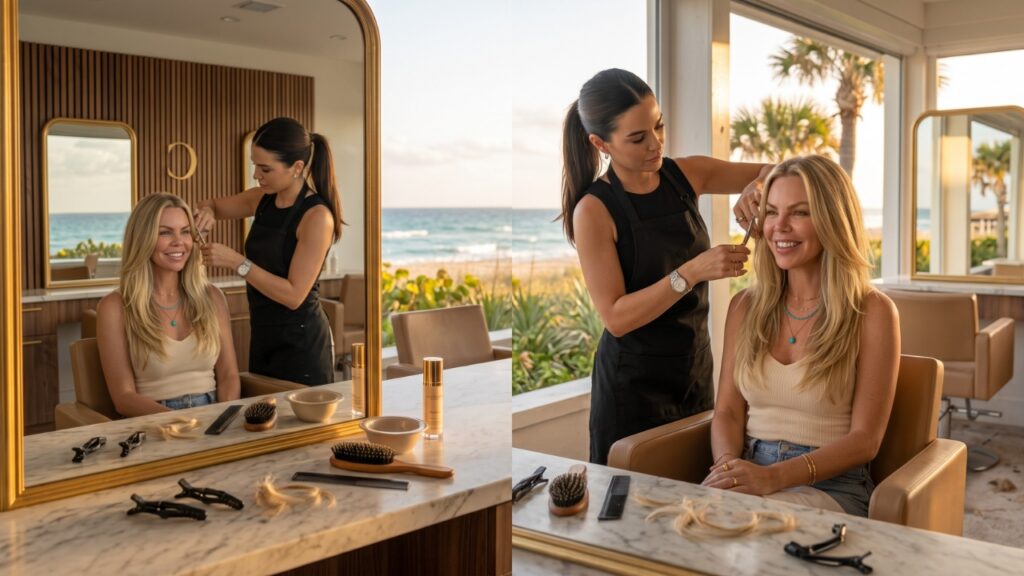
The Styling Signals – What Your Routine Is Telling You
Signal Six – Products That Used to Work Are No Longer Working
One of the most practically reliable and the most consistently overlooked signals that a haircut is needed is the specific experience of products that previously worked beautifully suddenly seeming to underperform – the same shampoo, the same conditioner, the same styling products that produced satisfying results three months ago now seeming unable to produce the same quality of result regardless of how carefully or how generously they are applied.
This experience is frequently attributed to the products themselves – the “my hair has gotten used to this shampoo and I need to switch” interpretation that sends many women into an extended rotation of different products in search of the formula that will restore the quality their hair used to have. In many cases, though, the products have not changed and the hair’s underlying health has not changed – what has changed is the length and the condition of the hair’s ends, which are affecting the way every product performs.
Products perform differently on different lengths and different hair conditions. When the hair has grown significantly past its last cut and the ends have accumulated meaningful damage, the product’s interaction with the hair changes – the damaged ends absorbing product differently, the additional weight and length changing the styling result, the overall condition of the perimeter affecting the finished appearance in ways that no product reformulation can address.
The signal: when you find yourself cycling through products looking for the one that will restore your hair’s previous quality – and none of them are working – consider whether the issue is the products or the hair’s need for a professional cut before concluding that your entire product routine needs an overhaul. A fresh women’s haircut combined with a professional Moroccanoil treatment or deep conditioning treatment frequently resolves the “nothing is working” experience more completely than any product change could.
Signal Seven – Styling Takes Significantly Longer Than It Used to
Time is one of the most honest measures of whether a haircut is current or overdue – because the time required to style hair to a satisfying result is directly affected by the haircut’s condition. Hair that is at its designed length, with healthy ends and appropriate shape, styles efficiently – the cut doing much of the work, the hair responding quickly to styling tools and products, and the result arriving in a reasonable time with a reasonable effort.
Hair that has grown significantly past its designed length – with accumulated weight, compromised ends, and a shape that no longer matches the intended design – styles slowly and inefficiently. More sections require more work. The weight resists the styling direction. The damaged ends require more product to behave acceptably. The overall shape requires more effort to guide into something that looks intentional because the cut is no longer providing the structural foundation that makes intentional styling easy.
The specific calculation: Think about how long your current daily styling routine takes. Now think about how long it took when your hair was freshly cut. If the current routine is meaningfully longer – ten, fifteen, twenty or more additional minutes per day – and if the result is still less satisfying than the freshly-cut result despite the additional time, the styling time signal is telling you that the haircut’s structural contribution to your daily routine has been exhausted and needs professional restoration.
Signal Eight – You Are Wearing Your Hair the Same Way Every Single Day
One of the subtler but more psychologically telling signals that a haircut is overdue is the gradual narrowing of the styles you wear your hair in – the progressive reduction from the variety of styling options the fresh cut provided to the single, reliable, comfortable option that works regardless of the hair’s current condition.
Freshly cut hair offers styling variety – the different ways to wear the haircut that the cut’s shape, movement, and proportion create naturally. Grown-out hair tends toward a single default style – typically the one that most effectively conceals the grown-out quality, or the one that requires the least effort to produce an acceptable result. The high bun. The same braid. The ponytail that has become the daily uniform because everything else requires too much management.
When you realize that you have been wearing your hair in the same one or two styles every day for weeks – not because these are your preferred styles but because they are the most manageable given the current state of the hair – the variety signal is telling you that the haircut has lost the versatility and the ease of expression that a well-maintained cut provides.
A fresh professional haircut restores this variety – the shape, the movement, and the proportional relationships that different styling options require returning to the hair’s vocabulary and making the full range of looks that the cut was designed to support accessible again.
Signal Nine – The Blowout Does Not Hold
For Jensen Beach women who regularly get blowouts – either at home or professionally – the duration and the quality of the blowout result is one of the most reliable indicators of whether the underlying haircut is current.
A well-executed blowout on freshly cut hair holds beautifully – the cut’s shape providing the structural foundation that the blowout creates on top of, and the clean, healthy ends maintaining the smooth, polished finish through the day and often into the next. A well-executed blowout on hair that has grown significantly past its last cut holds less well – the additional weight pulling the style down faster, the damaged ends reverting to their natural frizzy quality more quickly, and the overall blowout result deteriorating in hours rather than lasting through the day.
If you have noticed that your blowouts – whether professional or at-home – are not lasting as long or looking as good as they used to, and if the Jensen Beach humidity cannot fully account for the change, the blowout holding signal is worth taking seriously as an indicator that the haircut needs refreshing. A great starting point is a dry haircut appointment at Parlay – seeing and cutting the hair in its natural state gives the most accurate picture of what the hair genuinely needs.

The Mirror Signals – What You See That Is Hard to Articulate
Signal Ten – The Hair Looks Dull Even When It Is Clean
Dullness in clean, freshly washed hair is one of the most immediately visible signals that the hair’s ends need professional attention – because the light-reflecting quality that makes hair look shiny, healthy, and genuinely luminous is a function of the cuticle’s smoothness, and the cuticle’s smoothness deteriorates significantly at the hair’s ends as they accumulate damage between professional cutting appointments.
A smooth, intact cuticle – the state of freshly cut, healthy hair ends – reflects light uniformly and creates the specific, consistent shine that makes healthy hair look so beautiful in any light. A rough, damaged, split cuticle – the state of hair ends that have grown past their last cut and accumulated environmental and mechanical damage – scatters light rather than reflecting it, creating the flat, matte, dull quality that the hair develops when it needs professional attention.
In Jensen Beach’s outdoor light specifically: The combination of direct sunshine and Jensen Beach’s warm, beautiful outdoor setting creates the most revealing and the most honest light available for assessing hair quality – and dull, damaged hair ends that might pass scrutiny in softer indoor lighting look genuinely flat and lifeless in Jensen Beach’s direct afternoon sunshine. If you have noticed in outdoor photographs or in Jensen Beach’s outdoor light that your hair looks less luminous than you would like – and if the issue persists through conditioning treatments and product changes – the dullness signal is almost certainly pointing to ends that need professional removal.
A Moroccanoil treatment or deep conditioning treatment at Parlay incorporated into your next haircut appointment addresses both the structural signal (the cut removing damaged ends) and the conditioning signal (the treatment restoring moisture and cuticle integrity throughout) simultaneously – creating the most complete restoration of the luminous quality that well-maintained hair has.
Signal Eleven – The Face-Framing Is No Longer Framing
This signal is one of the most subtle and the most universally experienced – and one of the most immediately, most dramatically resolved by a professional haircut.
Face-framing sections – whether specifically designed face-framing layers, the front sections of a bob, the face-framing pieces of a balayage result, or any other element of the haircut specifically designed to create a flattering relationship between the hair and the face – are designed for a specific length. At that specific length, the face-framing creates the particular softening, the particular definition, the particular drawing-of-the-eye-toward-the-face that makes the haircut most flattering for the specific face it was designed for.
As the hair grows, the face-framing grows past its designed length and falls past the point where it creates the intended framing effect. Face-framing that was designed to fall at the cheekbone falls to the jaw. Face-framing that was designed at the jaw falls to the neck. The specific framing relationship with the face’s features – the thing that made the haircut so specifically flattering – is progressively lost as the face-framing grows past its designed point.
The signal: when you look in the mirror and the hair seems less specifically flattering to your face than it was – when the relationship between the hair and your features feels less precise, less specifically designed, less intentionally flattering – the face-framing signal is almost certainly what you are responding to. A haircut that restores the face-framing to its designed length restores this specific flattery immediately and completely.
Our guide to choosing the right haircut for your face shape is a useful companion read to this guide – because understanding why specific face-framing elements were chosen for your specific face helps you recognize more quickly when those elements have grown past their intended position.
Signal Twelve – Outdoor and Candid Photographs Look Different From How You Feel
This signal is one of the most specifically Jensen Beach-relevant on this entire list – because Jensen Beach’s extraordinary outdoor lifestyle creates more casual photography opportunities per week than most communities anywhere in the country, and because those photographs provide one of the most honest, the most revealing, and the most frequently-checked assessments of the hair’s current quality.
The gap between how you feel your hair looks in your bathroom mirror and how it looks in candid outdoor photographs is one of the most reliable indicators of a haircut’s current state. The bathroom mirror is typically softer, more forgiving, and more familiar than the camera – and the camera, particularly in Jensen Beach’s direct outdoor sunshine, captures the hair with a fidelity and a revealing quality that the bathroom mirror does not.
When candid photographs consistently show hair that looks heavier, less shaped, less vibrant, or less flattering than you expect based on your bathroom mirror assessment – and when this gap has been growing over the recent weeks – the photography signal is a reliable indicator that the haircut has moved meaningfully past its most photogenic state.
The Treasure Coast’s outdoor photography opportunities – the beach gatherings, the waterfront events, the boat days, the outdoor social occasions that fill Jensen Beach’s calendar – make this signal one of the most frequently and the most consistently available for assessment. The next time you scroll through a recent set of outdoor photographs and find yourself feeling unexpectedly disappointed by the hair – pay attention to that response. It is one of the most reliable haircut signals available in Jensen Beach’s specific lifestyle context.
The Psychological Signals – What You Are Feeling That the Hair Is Causing
Signal Thirteen – You Have Stopped Feeling Like Yourself in Your Hair
This is the signal that is the hardest to describe and the most important to take seriously – the specific, quiet, persistent sense that the hair you are wearing does not feel like your hair at its best, or like you at your most comfortable and most confident in your own appearance.
It is not a dramatic feeling. It is not the distress of a genuinely bad haircut. It is something quieter and more persistent – a slight mismatch between how you feel on the inside and how the hair is representing you on the outside. A slight dampening of the natural confidence that comes from feeling genuinely well put-together. A slight reluctance to fully engage with Jensen Beach’s outdoor social occasions because the hair is not in the state you would choose for those occasions.
This feeling develops gradually, often below the threshold of conscious attention, as the haircut progressively moves further from its most beautiful state. And it resolves – often immediately and dramatically – with a professional haircut that restores the hair to the shape, the length, and the condition that makes it feel genuinely, specifically right.
The signal: when you notice this quiet mismatch – when you recognize the slight reluctance, the slight dampening, the sense that the hair is not quite representing you the way you want it to – that recognition itself is the signal. You do not need to wait for the hair to be dramatically, obviously in need of attention. The quiet sense that it is not at its best is reason enough to make the appointment.

Signal Fourteen – You Are Increasingly Envying Other Women’s Hair
This signal is one of the most socially embedded and the most universally experienced – the specific phenomenon of noticing and admiring the hair of other women with increasing frequency and intensity as your own hair moves further from its most beautiful state.
The woman at the waterfront restaurant whose hair catches the light beautifully and whose overall appearance seems effortlessly polished. The woman at the outdoor market whose haircut looks so specifically right for her face, her style, and Jensen Beach’s warm outdoor light. The colleague whose hair seems to look genuinely great every day without visible effort.
These observations are not inherently problematic – noticing beautiful hair is a normal, human response to beauty in any form. But when these observations are accompanied by a specific, recurring sense of “I wish my hair looked like that” – when they are not simply appreciative but wistful, when they carry a slight sting of comparison – this is the envy signal telling you that your own hair is not currently giving you what it is capable of giving you, and that a professional appointment would close the gap between the hair you have and the hair you want.
Signal Fifteen – You Are Avoiding Styling Your Hair Altogether
The final and most telling psychological signal that a haircut is overdue is the specific behavioral pattern of avoiding styling the hair altogether – defaulting consistently to the simplest possible styles not as a deliberate aesthetic choice but as a form of low-level avoidance of a styling experience that has become more frustrating than satisfying.
When getting ready in the morning has shifted from including hair as a genuine part of the routine to simply putting the hair in a bun or a ponytail as quickly as possible and moving on – not because the bun or the ponytail is the most beautiful choice for the day but because engaging with the hair in its current state produces more frustration than enjoyment – the avoidance signal is one of the clearest possible indicators that the hair needs professional attention.
A professional haircut that restores the hair’s shape, removes its damaged ends, and returns it to a state where daily styling is genuinely satisfying rather than genuinely frustrating resolves this avoidance pattern immediately. The morning after a great haircut at Parlay is the morning when the hair goes back to being something you look forward to engaging with – a genuine, daily pleasure rather than a daily management challenge.
The Jensen Beach-Specific Signals
Signal Sixteen – The Salt Water and Pool Season Has Done Visible Damage
Jensen Beach’s outdoor lifestyle creates one of the most specific and the most reliably scheduled haircut needs in the entire year – the appointment that is needed after the most intensive period of salt water and pool exposure has done its cumulative work on the hair’s condition and appearance.
For Jensen Beach’s most active outdoor residents – the women whose summer months involve near-daily ocean swimming, regular pool use, and consistent exposure to the combination of UV radiation and salt air that Jensen Beach’s peak season creates – the period of most intensive environmental exposure produces a specific, cumulative pattern of hair damage that professional cutting addresses most directly and most effectively.
The visible signs of accumulated salt water and pool damage:
The hair feels coarser and drier than it did before the intensive exposure period began. The ends have developed a rough, almost hay-like quality from the combined osmotic effect of salt water and the oxidizing effect of pool chlorine. The color – if the hair is color-treated – has faded or shifted in tone more dramatically than usual, reflecting the UV and chemical exposure. The overall vitality and shine of the hair have diminished in ways that conditioning treatments improve but do not fully resolve.
When you recognize this specific pattern of accumulated environmental damage – the specific post-intensive-season dryness, roughness, and overall tired quality that Jensen Beach’s most active outdoor period creates in the hair – a professional haircut that removes the most damaged sections combined with a K18 treatment or deep conditioning treatment is the most complete, the most immediately effective, and the most genuinely restorative response available.
Signal Seventeen – The Humidity Is Working Against Your Hair Instead of With It
One of the most specifically Jensen Beach-relevant signals in this entire guide is the shift in the relationship between the hair and Jensen Beach’s ambient humidity – from the positive, texture-enhancing, natural-wave-creating relationship that the right haircut in the right condition has with the Treasure Coast’s moisture-rich air, to the negative, frizz-creating, weight-adding, shape-disrupting relationship that hair whose cut has grown out has with the same humidity.
Well-maintained hair in the right haircut works with Jensen Beach’s humidity – the moisture in the air adding natural texture and movement that enhances rather than undermines the cut’s beauty. The wavy hair that becomes more beautifully wavy in the coastal air. The textured cut that gains an effortless quality from the humidity’s contribution to the style. The natural curl that becomes more defined and more luminous in Jensen Beach’s moisture-rich environment.
Grown-out hair in a cut that has moved past its designed state fights Jensen Beach’s humidity – the moisture adding weight that pulls the shape down rather than adding movement that lifts it, contributing to frizz that the cut’s lack of current shape cannot control, and creating a daily battle between the hair’s behavior in the humidity and the style the person is trying to maintain.
When you notice that Jensen Beach’s humidity – which used to feel like an ally of your hair’s natural beauty – has begun feeling like an adversary that must be managed with increasing product and effort, the relationship-with-humidity signal is telling you clearly that the haircut needs refreshing. A Brazilian Blowout or keratin treatment combined with a fresh haircut at Parlay is one of the most complete and the most immediately satisfying responses to this specific signal – the cut restoring the shape and the smoothing treatment restoring the humidity management that together create the most effortlessly beautiful hair result available in Jensen Beach’s specific climate.
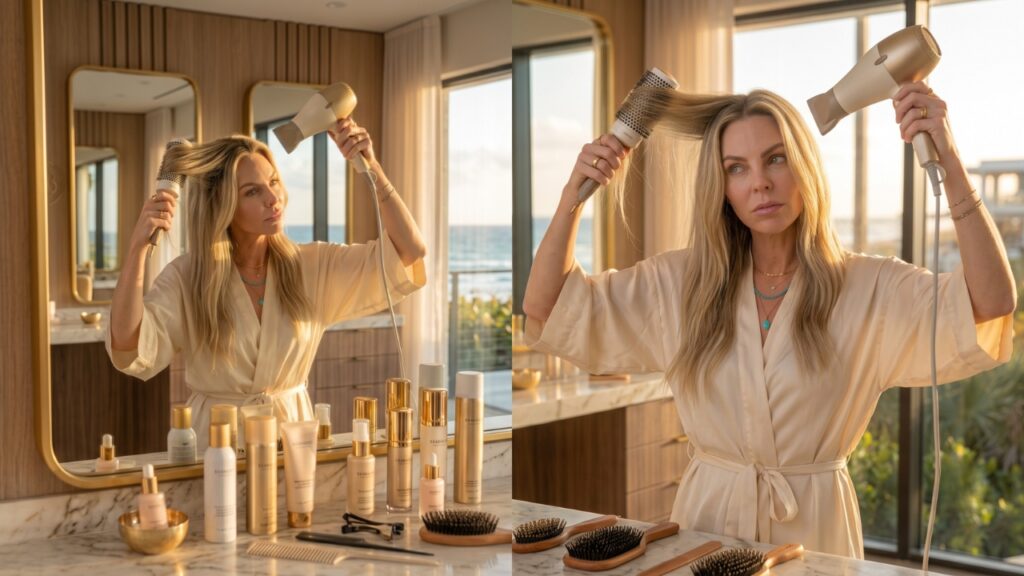
How Long Has It Actually Been? – The Honest Schedule Guide
The Recommended Haircut Intervals – By Hair Type and Style
Beyond the specific signals described throughout this guide, the simplest and the most universally reliable haircut timing guidance is based on the specific interval most appropriate for each hair type and style. When the signals are subtle and difficult to read, the interval provides the most consistent fallback – the baseline frequency at which professional haircuts maintain the most consistently beautiful results regardless of whether the signals are clearly present.
Short haircuts – every four to six weeks:
Short haircuts – including bob haircuts, pixie cuts, and precision short styles – have the shortest appropriate interval of any haircut category. The grow-out of a short haircut is immediately and significantly visible – the precise shape that makes a short cut so striking becoming noticeably compromised within three to four weeks of the appointment. For most short haircut clients in Jensen Beach, a four to six week interval maintains the most consistently beautiful expression of the style throughout the year.
Medium-length haircuts – every six to eight weeks:
Medium-length cuts – the lobs, the medium layered cuts, the collarbone-length styles that fall between the chin and the shoulder – have a somewhat more forgiving grow-out than short cuts but still benefit from consistent six to eight week professional attention. In Jensen Beach’s environment, where split end development is accelerated by UV and water exposure, the six-week end of this range is more appropriate for the most active outdoor clients.
Long haircuts – every eight to twelve weeks:
Long hair has the most forgiving grow-out of any length category – the additional length absorbing growth more gradually and making the difference between freshly cut and grown-out less immediately visible. However, the ends of long hair are the oldest, the most environmentally stressed, and the most accumulated-damage portions of the hair – and the consequence of skipping the eight to twelve week maintenance interval accumulates more significantly in long hair than in shorter styles. Jensen Beach’s most environmentally active long-hair clients benefit from the eight-week end of this range.
Curly haircuts – every ten to twelve weeks:
Curly hair’s natural spring and contraction make the grow-out of a curly hair cut less immediately visible than the grow-out of straight hair at the same length – the curl absorbing additional length more gradually. Most curly-haired Jensen Beach clients find a ten to twelve week interval appropriate, determined more by the appearance of the ends and the shape than by elapsed time.
What to Do When You Recognize the Signals
Making the Most of the Haircut Appointment the Signals Have Been Building Toward
Recognizing the signals is the first step. Making the most of the appointment they are pointing toward is the second – and the guidance from our companion blog on haircut mistakes to avoid when trying a new style is the most directly relevant reading for anyone approaching a significant style change appointment.
For clients responding to the signals with a maintenance appointment – a trim or a shape refresh rather than a significant change – the most valuable preparation is a clear communication of the specific signals that have been most present: “My ends have been feeling rough,” or “The shape has completely grown out,” or “My face-framing is not framing anymore” – giving your Parlay stylist the specific information that allows her to address the most impactful aspects of the hair’s current state.
For clients responding to the signals with a desire for a genuine change – the recognition of the signals having created the opening for a new style decision – a thorough consultation that works through the specific considerations in our guide to avoiding the most common new style mistakes creates the most informed, the most well-considered, and the most ultimately satisfying new style decision available.
Enhancing the Haircut Appointment – The Treatments That Complete the Signal Resolution
For many of the signals described in this guide – the dullness, the damage, the weight, the texture change at the ends – a professional haircut removes the most significantly compromised hair. But combining the haircut with a professional treatment creates the most complete signal resolution – addressing both the structural problem that the cut resolves and the conditioning and health problem that the treatment restores.
K18 Treatment – the most advanced structural repair available – addresses the bond damage that Jensen Beach’s environmental stressors and chemical processing create in the hair’s cortex, rebuilding the structural integrity that the signals of breakage, dullness, and texture change reflect.
Moroccanoil Treatment – argan oil-based conditioning that seals the cuticle, restores shine, and provides the UV protection that Jensen Beach’s sunshine demands – is one of the most consistently satisfying add-ons to any haircut appointment for addressing the dullness and the texture signals.
Deep Conditioning Treatment – deep moisture restoration for hair that has been significantly depleted by UV exposure, salt water, pool chemicals, and heat styling – is the most impactful single conditioning intervention available for the accumulated moisture deficit that Jensen Beach’s most active outdoor lifestyle creates.
Olaplex Treatment – bond repair technology that works similarly to K18 – provides another option for structural restoration that complements the haircut’s physical damage removal with chemical repair of the internal damage that scissors cannot address.
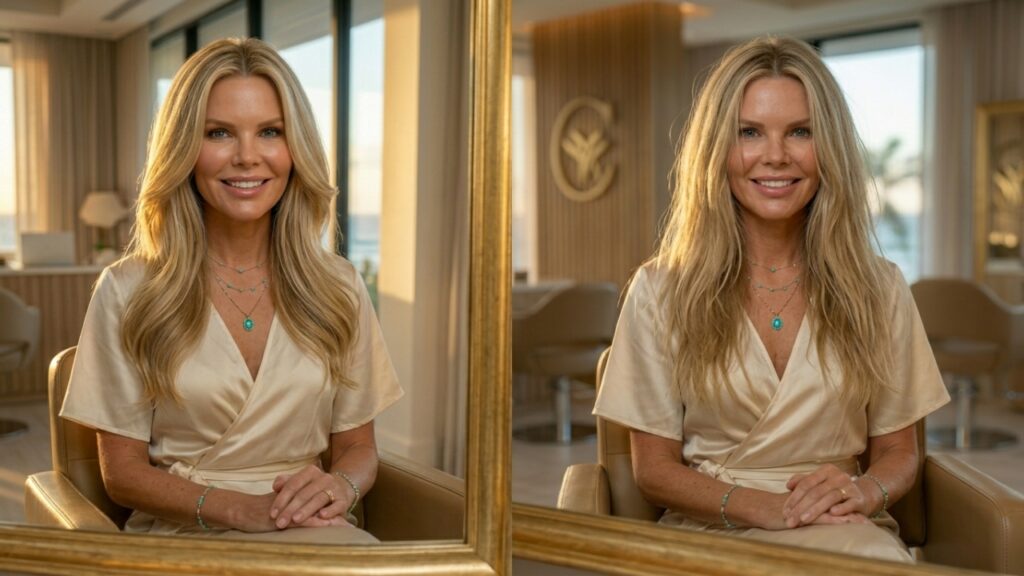
Frequently Asked Questions
The Questions Jensen Beach Women Ask Most Often About Haircut Timing
How do I know if I need a trim or a full haircut? Our complete guide to the difference between a hair trim and a haircut addresses this question in full detail. The short answer: if the overall shape of your style is maintained and only the ends need attention, a trim is most likely appropriate. If the shape has been significantly changed by growth, a haircut is needed.
Can I go too long between haircuts? Yes – and the consequences compound over time. Going significantly past the appropriate interval for your haircut style does not simply mean the hair needs the cut it would have needed at the right interval. It means the hair has accumulated additional damage, additional weight, and additional shape compromise during the extended delay – often requiring more significant removal to restore the most beautiful result than regular maintenance would have required. Regular professional maintenance at appropriate intervals is more length-preserving over time than extended delays, not less.
Is it possible to need a haircut even if I am trying to grow my hair out? Yes – and this is one of the most important and most counterintuitive things about hair maintenance. Growing the hair out does not mean stopping all professional cutting. It means cutting strategically and conservatively – removing only what is genuinely needed for health and shape rather than cutting to maintain a specific length – while allowing the overall length to progress. Hair that is growing but receiving regular professional trimming of its most damaged ends grows more beautifully and reaches its target length in better condition than hair that is growing without any professional attention.
My hair is fine and I am worried that cutting it will make it look thinner – should I still come in? Fine hair benefits enormously from well-timed, well-executed professional cutting – the removal of accumulated weight at the ends restoring the volume and the lift that grown-out fine hair progressively loses. The concern about cutting making fine hair look thinner typically reflects a fear of the wrong cutting approach rather than a fear of cutting itself. Our fine hair specialists at Parlay are specifically experienced in the cutting techniques that maximize volume and fullness for fine hair at every length.
How much does a haircut appointment cost at Parlay? Women’s haircut pricing at Parlay starts at $55. Men’s haircut pricing starts at $35. All pricing is confirmed before any service begins. Call (772) 261-8116 or book online at parlayhairandbeauty.com for a specific quote and to schedule your appointment.
Conclusion: Your Hair Has Been Telling You – Now You Know How to Listen
The signals have been there – some of them for weeks, some perhaps for longer. The texture that changed. The shape that softened. The photographs that looked heavier than expected. The styling routine that started taking longer and producing less. The quiet sense that the hair is not quite at its best and has not been for a while.
Now you have the complete vocabulary for what those signals mean and what they are asking for. And the answer they are asking for is the same one they have always been asking for – a professional haircut, at the right time, by the right specialists, in the most genuinely beautiful salon on the Treasure Coast.
At Parlay Hair and Beauty in Jensen Beach, Florida, we are ready for your appointment – whenever the signals bring you to us. Come in with the specific signals you have been noticing. Share them clearly at the consultation. And let our specialists create the haircut that resolves every one of them and returns your hair to the most beautiful, the most alive, and the most genuinely satisfying state it can be in.
📍 2250 NE Dixie Hwy, Jensen Beach, FL 34957 📞 Call or Text: (772) 261-8116 🌐 Book Online: parlayhairandbeauty.com ⏰ Online Booking Available 24/7 via Vagaro
Parlay Hair and Beauty – Jensen Beach’s most trusted salon for women’s haircuts, men’s haircuts, kids’ haircuts, color, balayage, extensions, and complete hair services. Serving Jensen Beach, Stuart, Palm City, Hobe Sound, Hutchinson Island, Port St. Lucie, and all of Martin County, Florida.